
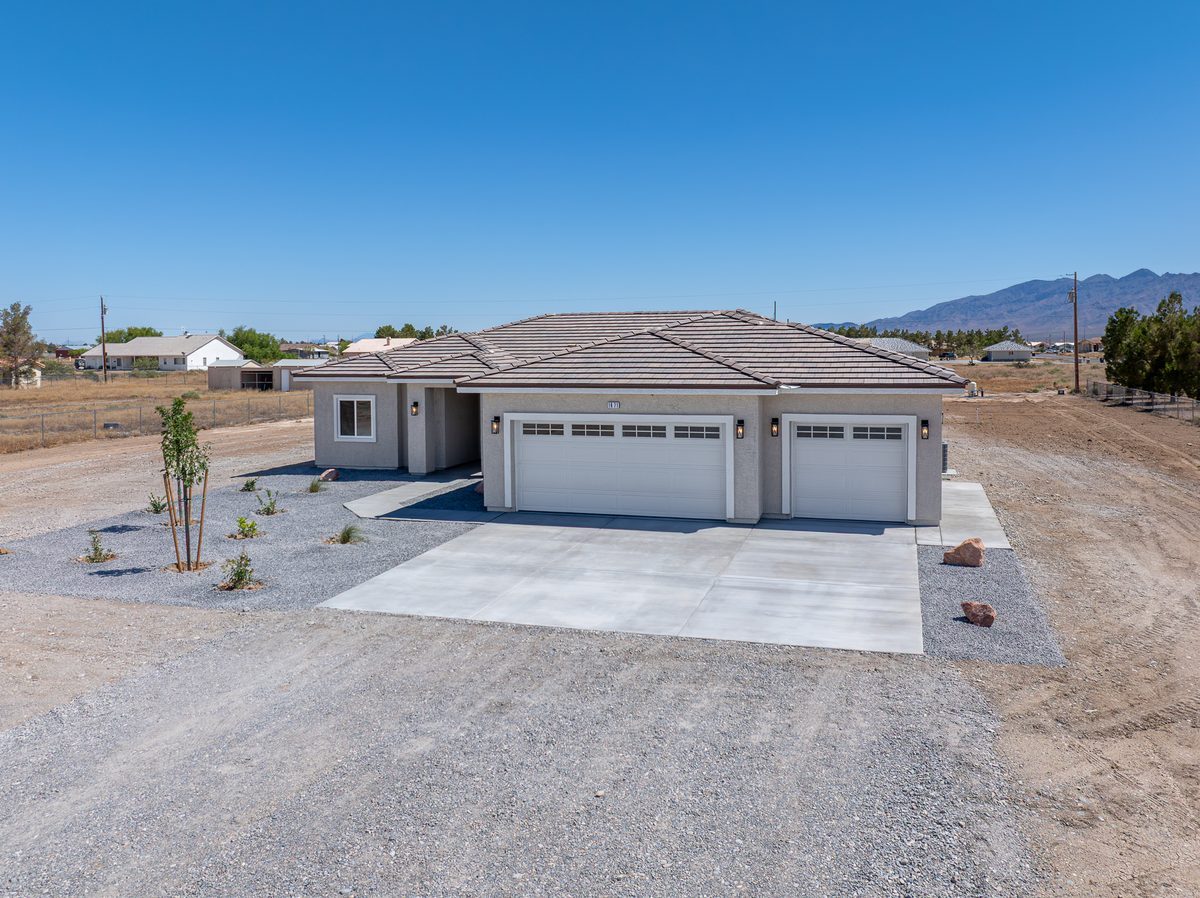
If you’re planning to build a custom home in Pahrump, Nevada, one of the first things you’ll realize is that there’s no city water and no city sewer. In Pahrump, that means every home runs on a private well and a septic system. For buyers moving from Las Vegas or Henderson, this can feel unfamiliar — but it’s completely standard here in Nye County, and we’ve done it on every home we’ve built.
Understanding well and septic systems in Pahrump upfront will save you time, money, and surprises during your build. Here’s what we tell every buyer who comes to us about building on a lot in the Pahrump Valley.
Why Pahrump Runs on Wells and Septic — Not City Utilities
Pahrump sits in a valley in Nye County, Nevada, about 60 miles west of Las Vegas. The city has grown significantly over the past decade, but unlike Henderson or North Las Vegas, Pahrump does not have a centralized municipal water system or sewer network covering most residential areas. Instead, homeowners tap into the Pahrump Valley’s groundwater supply through private wells, and wastewater is handled through individual septic systems on each lot.
This isn’t a drawback — it’s just the landscape. Many buyers actually prefer it. You’re not paying monthly water and sewer utility bills tied to a municipal system. On a one-acre lot in Pahrump, your property serves itself. We’ve drilled wells and installed septic systems on every ICH build, including our completed project at 1671 Iguana Street and our current build at 3550 Margarita Avenue.
What Does Well Drilling in Pahrump Actually Cost?
Well drilling in Pahrump typically runs between $8,000 and $20,000 depending on depth. The Pahrump Valley has good groundwater, but depth varies by location. Most residential wells in the valley reach usable water somewhere between 150 and 400 feet down. The deeper you have to go, the more it costs.
Here’s what affects your well cost on a well septic Pahrump build:
- Depth to water table — varies by exact lot location in the valley
- Casing and pump equipment — submersible pump, pressure tank, and electrical hookup add to the base drilling cost
- Well permit from the State of Nevada — required before any drilling begins; your builder handles this
- Water quality testing — standard practice before occupancy, required for your CO
We coordinate directly with a licensed well driller as part of your build process. It’s one less thing you have to track down yourself.
Septic Systems in Pahrump: The Basics
A standard residential septic system in Pahrump consists of a septic tank (typically 1,000–1,500 gallons for a 3-bedroom home) and a leach field, also called a drain field. Wastewater flows from the home into the tank, where solids settle and liquid effluent disperses into the soil through the leach field.
Nye County and the Nevada Division of Environmental Protection (NDEP) both have permitting requirements for septic systems. Before your permit is approved, a perc test — short for percolation test — is conducted to confirm the soil on your lot can absorb effluent at the required rate. Pahrump’s desert soils generally perc well, but some lots with caliche layers or tight clay soil require engineered systems, which cost more.
Typical septic system installation in Pahrump runs $6,000 to $15,000, depending on system type and lot conditions. For most standard one-acre lots in Pahrump, a conventional system is sufficient.
How Well and Septic Fit Into Your Overall Build Timeline
Both the well and septic need to be permitted and installed before your home can receive a certificate of occupancy (CO) from Nye County. That means these items need to be on the schedule early — not an afterthought.
In a typical ICH build timeline, here’s how well and septic work fits in:
| Phase | Well & Septic Activity | Timing |
|---|---|---|
| Pre-construction | Well permit application (State of Nevada) | Before grading begins |
| Site prep | Well drilling and pump installation | Early in the build — construction water needed |
| Foundation/framing | Septic permit application and perc test | Concurrent with early framing |
| Rough plumbing | Septic tank installation and leach field layout | After rough grade, before final grade |
| Final inspections | Water quality test, system sign-off | Before certificate of occupancy |
If you want the full picture of what a build looks like from start to finish in Pahrump, read our guide on how long it takes to build a home in Pahrump, NV.
What to Look for When Evaluating a Lot for Well and Septic
Not all lots in Pahrump are equal when it comes to well and septic suitability. Before you buy land and start planning a build, here are the things that matter:
- Existing well data — check Nevada Division of Water Resources records for nearby well logs; they’ll tell you approximate depth to water in that area
- Soil type and caliche layers — caliche is a hardpan layer common in desert soils that can complicate leach field installation; a perc test will catch this
- Setback requirements — in Nye County, wells must maintain minimum distances from septic systems, property lines, and structures
- Lot size — a one-acre lot in Pahrump gives you the space to properly separate your well and septic and still have room for the home and outbuildings
We walk through all of this during the lot evaluation phase when you work with us. For a deeper look at lot selection, see our post on what to look for when buying land in Pahrump, NV.
Frequently Asked Questions
Is well water safe to drink in Pahrump?
Yes — Pahrump Valley groundwater is generally good quality. Before your home gets a certificate of occupancy, a licensed lab tests your well water for bacteria and basic contaminants. Most wells in the area pass without issue. If you want additional treatment — like a whole-house filtration or softening system — that’s a simple add-on we can work into the build.
How much does it add to the total cost of building in Pahrump?
Budgeting a combined well and septic allowance of $20,000–$35,000 is a reasonable range for most Pahrump builds, covering drilling, pump, tank, and leach field. This is already factored into how we price ICH homes. For full context on what drives home building costs in Pahrump, see our 2026 cost-to-build guide.
Do I need to maintain my septic system?
Yes. Septic systems in Pahrump require periodic pumping — typically every 3–5 years for a standard household — and should be inspected if you notice slow drains or odors. Avoid putting grease, non-biodegradable wipes, or harsh chemicals down the drain. With proper use, a well-installed septic system will last 25–30 years before needing major work.
Can I build on a lot in Pahrump if it doesn’t have an existing well?
Absolutely. Most of the lots we build on in Pahrump start raw — no well, no utilities. We permit and drill the well as part of the build process. The only requirement is that the lot is in an area where the State of Nevada will approve a new well permit, which applies to virtually all residential lots in the Pahrump Valley. Check out our full guide on building on your lot in Pahrump for more on starting from a raw parcel.
Ready to Build in Pahrump? Let’s Talk.
Well and septic is one of those topics that sounds complicated but becomes straightforward once you’ve done it a few times. We’ve installed these systems on every home we’ve built in Pahrump — from Iguana Street to Margarita Avenue — and we handle the permitting, contractor coordination, and inspections so you don’t have to figure it out yourself.
If you’re planning a custom build on your lot in Pahrump or you’re looking for a lot to build on, reach out to Innovative Custom Homes and let’s walk through your project. You can also browse our build process page to see how we work from start to finish. Call us at (702) 684-2595 — we’re local, and we know Nye County.